
Export guide
ISPM15 explained for UK exporters
The rule that decides whether your pallet clears the border or costs you a re-pack. Here is what it covers, what the stamp means and how to stay on the right side of it.
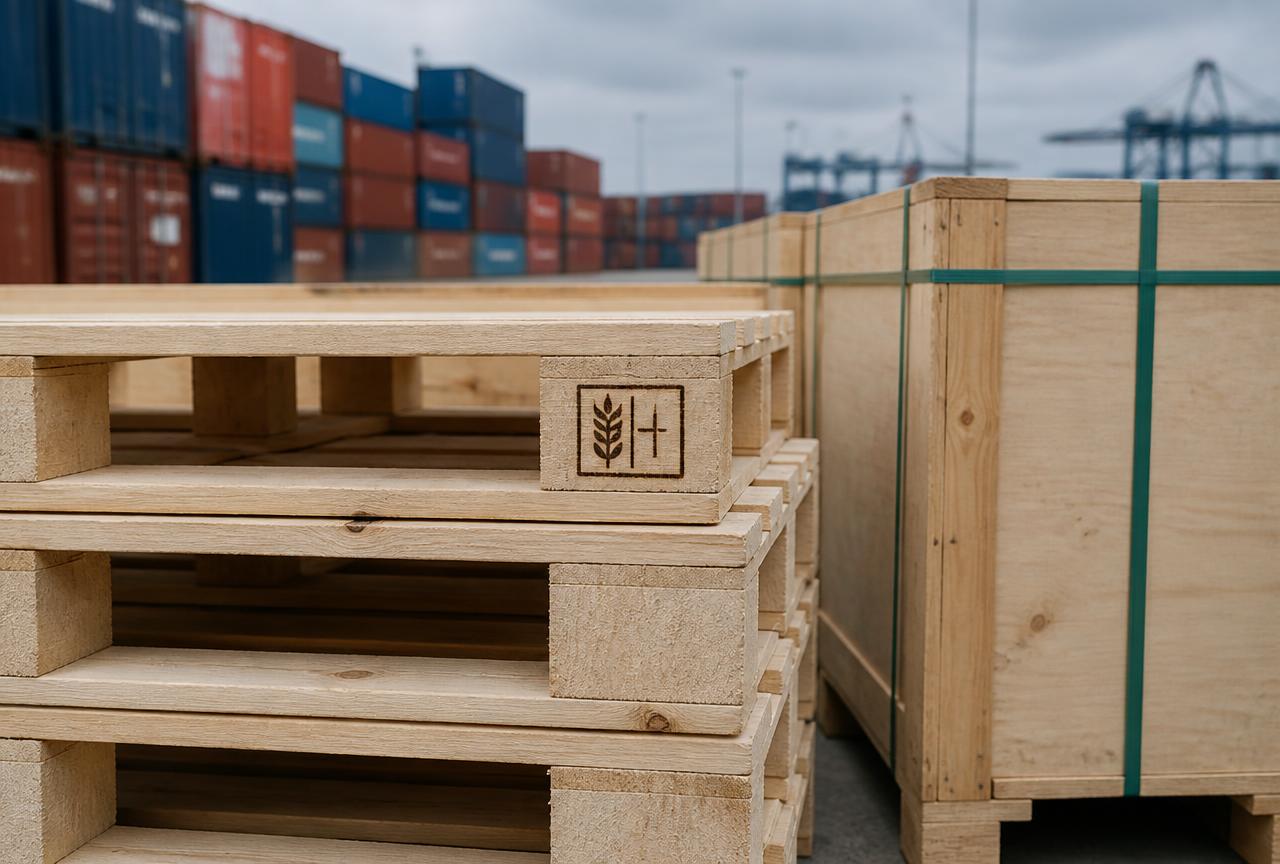
What ISPM15 is
ISPM15 is the international phytosanitary standard for wood packaging material used in trade between countries. Its purpose is to stop timber packaging carrying pests such as bark beetles and wood-boring larvae into new ecosystems. It applies to the packaging, not the goods inside it.
What is in scope
- pallets, skids and skid bases made from solid timber
- crates, cases and boxes made from solid timber
- dunnage, bracing, blocks and bearers used to secure a load
- cable drums and timber frames
Manufactured wood-based products are generally outside scope because the manufacturing process itself destroys pests. That covers plywood, OSB, MDF, particleboard and moulded presswood pallets. So do plastic pallets, which contain no wood at all.
How treatment works
The common route in the UK is heat treatment, written as HT. The timber is heated in a kiln until the core of the wood reaches the required temperature and holds it for the required time. That kills pests through the section of the wood, not just on the surface. Kiln drying to a moisture specification often achieves it as a by-product, but the treatment has to be certified either way.
What the mark tells you
Treated packaging carries a stamp containing the IPPC wheat-ear symbol, a country code, the registration number of the producer who treated or manufactured it, and the treatment code — HT for heat treatment. The mark should be legible, permanent and visible on at least two opposite sides of the pallet or case.
Two practical points: an unmarked pallet is a non-compliant pallet regardless of how it was made, and a repaired pallet needs care because replacement components must also be treated and the pallet re-marked correctly.
What goes wrong
- bracing and dunnage inside a container gets overlooked while the pallet itself is compliant
- a compliant load is stacked on an untreated pallet at the last minute
- marks are painted over, sanded off or facing inwards and cannot be inspected
- a pallet is repaired with untreated boards, invalidating the original marking
The consequences range from inspection delays to fumigation, re-packing at destination, return of the consignment or refusal of entry — all at the exporter's cost, and all avoidable.
Practical steps for South Coast exporters
- order treated stock as standard rather than deciding per shipment
- keep export pallets physically separated from general yard stock
- brief the loading team to check marks before a container is stuffed
- treat bracing and blocking as part of the compliance job, not an afterthought
- for repeat shipments, agree a schedule so treated pallets are on site before the box arrives
We supply heat-treated, marked pallets, crates, cases and skid bases to exporters shipping through Southampton, Portsmouth and Poole. See export and heat-treated pallets or tell us your destination and loading date and we will confirm the specification.
This guide is a practical summary, not legal advice. Destination countries can apply additional requirements, so always confirm the rules for the country you are shipping to.