
Buying guide
New or used pallets: how to choose without overspending
Most businesses default to whatever they bought last time. Four questions about the load, the journey and who sees it will usually give you a cheaper answer that still works.
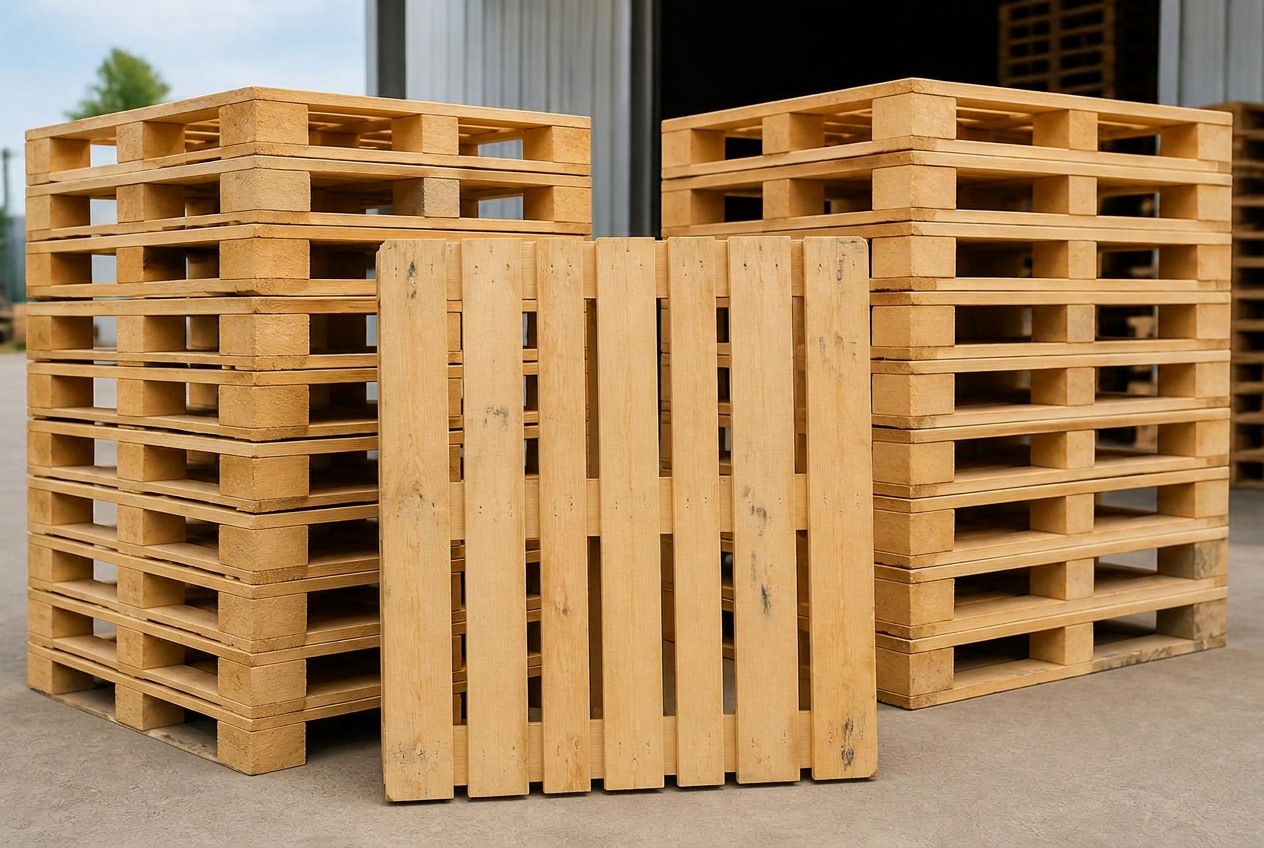
A pallet has one job: get a load from A to B without failing. Where a used pallet can do that, paying for new is paying for appearance. Where it cannot, saving a few pounds a pallet is the most expensive decision in the warehouse.
1. How heavy is the load, and how is the weight spread?
Dense, concentrated loads — castings, tiles, drums, packed liquids — put stress through a small area of deck. That is a case for new heavy duty timber with thicker bearers and closer board spacing. Lighter, evenly spread loads such as packaged goods, cartons and light components are perfectly served by graded used pallets.
2. How many journeys will it make?
A single-trip UK delivery through a pallet network rarely justifies new. A pallet that will shuttle between your sites for two years, get racked at height and be handled dozens of times often does. Between the two sits reconditioned stock: repaired, squared up and checked, at a fraction of new prices.
3. Who will see it?
If the pallet arrives in front of a retail customer, a food producer or an auditor, presentation counts. Clean new timber or a washable plastic pallet is the right call. For internal handling and goods-in, condition matters more than looks.
4. Where is it going?
Anything leaving the UK on solid timber needs to satisfy ISPM15, which means heat-treated and marked stock. That is not a new-versus-used question, it is a treatment question — read our ISPM15 guide before you order.
What "used" should actually mean
Used stock varies wildly between suppliers, which is why grading language matters more than the word itself. A pallet sold as serviceable should have:
- no broken or missing deck boards in the load-bearing positions
- no cracked bearers or crushed blocks
- no protruding nails or exposed fixings
- square construction so it enters racking and pallet trucks cleanly
- consistent size across the load, not a mixed pile
We grade to that standard, repair what can be repaired and recycle what cannot. Details of the grades we hold are on the used pallets page.
The quick answer
Light to medium loads, UK journeys, internal handling: buy graded used and save. Heavy or concentrated loads, racking at height, hygiene-critical work, automation or customer-facing deliveries: buy new. Exporting: buy heat treated. Not sure? Send us the load details and we will tell you which one we would put underneath it.